
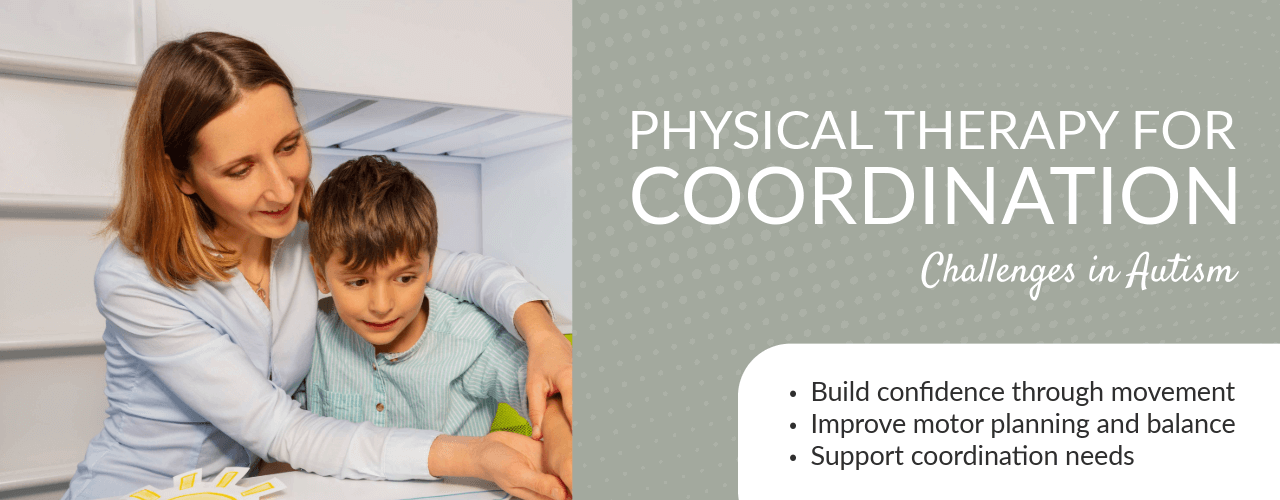
Many children with autism experience motor delays and difficulty with movement, often referred to as coordination challenges autism. These challenges may not always be the first thing parents notice, but they can significantly impact a child’s ability to interact, play, and learn. For families navigating this journey, pediatric physical therapy at Therapy In Motion offers targeted solutions to support better movement and greater independence.
When the Body Doesn’t Cooperate: Why Autism Affects Coordination
While autism is often associated with communication and social differences, it also impacts how the brain processes movement and body awareness. Coordination challenges in autism can stem from differences in sensory integration, muscle tone, and motor planning. Here’s what happens:
- The brain struggles to send accurate signals to muscles
- Sensory input (like touch or balance) may be misinterpreted
- Children may not know how to start or complete a movement
- Low or high muscle tone can make control difficult
This can affect everyday tasks, such as walking, running, climbing, catching a ball, or using utensils.
It’s important to understand that these coordination challenges aren’t just developmental delays. Instead, they’re rooted in the neurological differences that come with autism.
Symptoms of Coordination Challenges in Autism
Every child with autism is unique, but there are some common patterns that signal coordination issues, particularly during play or daily routines. Watch for these signs:
- Frequent tripping or falling
- Trouble climbing stairs or onto furniture
- Difficulty catching or throwing a ball
- Delayed crawling or walking
- Clumsy or uncoordinated movements
- Avoidance of playground activities
- Poor posture or balance
- Trouble learning to ride a bike
Children with coordination challenges and autism may also avoid active play, limiting their social experiences and confidence.
Movement Matters: How Physical Therapy Helps
Pediatric physical therapy is uniquely equipped to help children with coordination challenges and autism. Therapists design individualized treatment plans that target motor development, balance, strength, and movement control. Ultimately, therapy focuses on:
- Improving balance and posture
- Enhancing gross motor skills (like jumping, running, skipping)
- Developing better motor planning and sequencing
- Building strength and endurance
- Increasing confidence in movement
Therapists use fun, purposeful activities that feel like play but are designed to create lasting change. Sessions may include:
- Obstacle courses to build agility and motor planning
- Balance beams or yoga poses for core strength
- Ball games to improve coordination and timing
- Sensory-rich activities to enhance body awareness
With consistent therapy, children become more confident in their bodies and can better participate in daily life.
Bringing It Home: What Parents Can Do Between Sessions
Progress doesn’t stop at the clinic. Parents can support their child’s development at home with simple strategies and activities. Here are a few suggestions from the Therapy In Motion PTs:
- Play movement games like Simon Says or hopscotch to build body awareness
- Encourage outdoor play that involves climbing, running, and jumping
- Create simple obstacle courses using pillows, cones, or boxes
- Use visual cues like footprints or arrows on the floor to help with movement patterns
- Incorporate daily routines that challenge coordination, like stepping over cracks or balancing on one foot
Consistency is key. The more a child practices movement in a safe, encouraging environment, the more likely they are to build skills and confidence.
A Closer Look: Physical Therapy and Coordination Challenges in Autism
The PTs at Therapy In Motion are partners in helping your child reach their fullest potential. For children facing coordination challenges due to autism, PT offers a structured, engaging, and supportive approach to mastering essential motor skills.
We can collaborate with other professionals, like occupational and speech therapists, to create well-rounded care plans. This team approach ensures all aspects of your child’s development are considered.
Most importantly, we tailor our sessions to your child’s needs, strengths, and personality. We track and celebrate your child’s progress so every session feels like a win.
Let’s Move Forward Together
If your child shows signs of coordination challenges with autism, early intervention through pediatric physical therapy can make a big difference. With the right support, your child can build strength, confidence, and independence.
Every step matters. Let Therapy In Motion be part of your child’s journey toward better movement and greater participation in everyday life. Contact us today to schedule an initial consultation.




Leave a Reply