
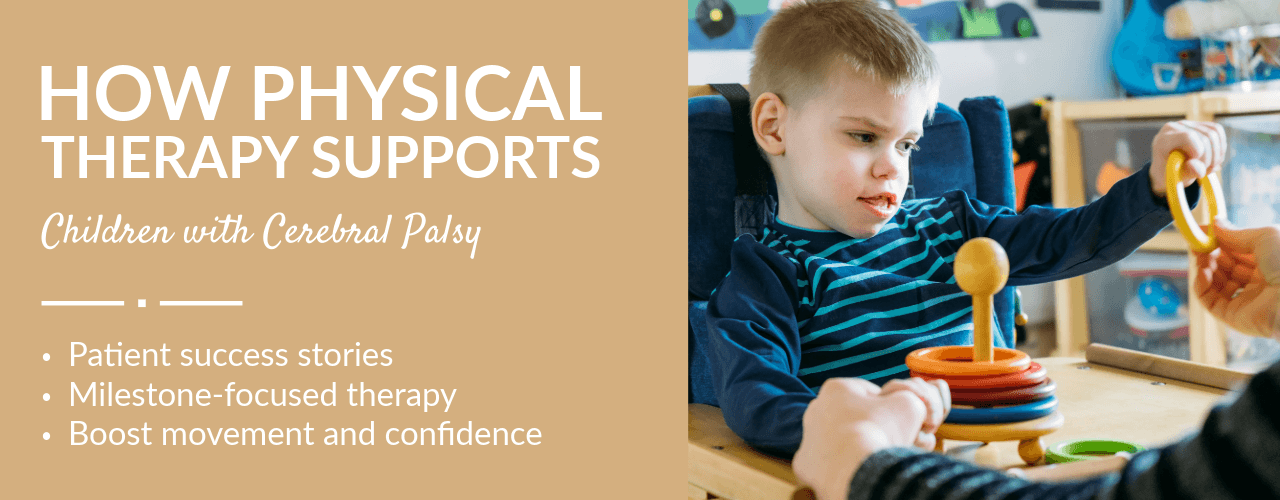
Discovering your child has cerebral palsy can be overwhelming, but coordinated care can help ensure your child thrives throughout their life. Physical therapy for cerebral palsy is crucial to this care, helping children build strength, improve movement, and gain independence.
At Therapy In Motion, we regularly work with kids who have cerebral palsy. Because the condition can cause a wide range of symptoms, we always tailor care to help every child thrive, no matter what challenges they’re facing. Today, we want to share three patient stories (all names have been changed) that illustrate how customized, play-based therapy helped three children overcome the challenges of cerebral palsy and meet meaningful milestones.
How Pediatric Physical Therapy Changed Three Young Lives
Jackson’s Journey: Building Balance and Strength
Jackson was diagnosed with spastic diplegia, a form of cerebral palsy that primarily affected his legs. At five years old, he had a hard time walking and utilized a walker to get around. Unfortunately, this made it harder for him to play with his peers.
Our pediatric physical therapists developed a plan that focused on:
- Strengthening his core and leg muscles
- Improving balance through games and obstacle courses
- Stretching exercises to reduce tightness in his legs
After six months of consistent therapy, Jackson could walk short distances without his walker. Perhaps more importantly, however, he began having regular play dates with some friends at a local playground.
Maya’s Milestones: Overcoming Muscle Stiffness
Maya, a seven-year-old with dyskinetic cerebral palsy, experienced involuntary movements that made it hard to hold objects or stay seated upright. Her fine motor skills were delayed, and simple tasks like brushing her teeth or writing were frustrating.
Her therapy sessions with us focused on:
- Enhancing trunk control with posture-focused exercises
- Repetitive hand and arm movements using toys and tools
- Incorporating sensory integration techniques for better body awareness
Over time, Maya learned how to stabilize her movements and even gained enough coordination to feed herself independently—a huge milestone in her care.
Eli’s Empowerment: Boosting Confidence Through Movement
Eli, age nine, had ataxic cerebral palsy, which affected his coordination and balance. He was often fearful of falling and avoided physical activity. This limited his confidence in social settings and impacted his emotional well-being.
Our pediatric team designed a program focused on:
- Low-impact exercises to improve balance and control
- Confidence-building games that encouraged trial and error
- Social play to increase peer interaction in safe environments
As Eli progressed, he made remarkable strides in his physical abilities. One of his proudest moments was joining a local soccer team that gave him a chance to play with adaptive rules. His story shows how physical therapy plays a role in the social development of kids with cerebral palsy, not just their physical development.
Why Physical Therapy for Cerebral Palsy Matters
As you can see, every child with cerebral palsy is different, but each can benefit from early, individualized physical therapy. Some of the key benefits include:
- Improved mobility and coordination
- Increased independence in daily activities
- Reduced risk of long-term complications
- Greater participation in school and play
Physical therapy for cerebral palsy helps build a strong foundation for a more active and confident life by tailoring care to each child’s unique needs.
Take the First Step Toward a Brighter Future
If your child has been diagnosed with cerebral palsy, know that pediatric physical therapy for cerebral palsy at Therapy In Motion can play an essential role in your child’s physical and emotional development. However, it’s important to get started as soon as possible! Early intervention can lead to lifelong progress.
Let’s take the first step together. Schedule an appointment at our Olathe, KS clinic to learn more about how our therapists can support your child’s development.




Leave a Reply