
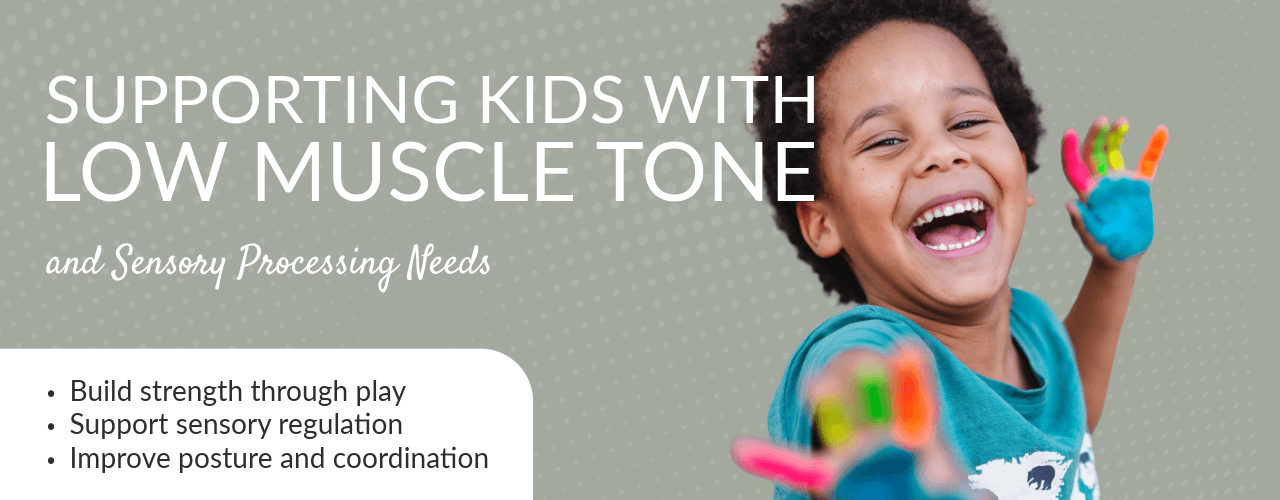
Does your child ever feel “floppy” when you pick them up? Have you noticed that they’re clumsy or easily overwhelmed by loud noises, bright lights, or touch? Kids can face many struggles with low muscle tone and sensory processing in their day-to-day life. Fortunately, the team at Therapy In Motion is here to help.
Children with low muscle tone (hypotonia) often appear weaker than their peers, have poor posture, tire quickly, or have delays in gross motor skills. Sensory processing challenges may cause kids to be overly sensitive to touch, movement, or sound, or they may seem to “crash” into things or constantly seek stimulation. Unfortunately, these two conditions often overlap.
As we work with families of low muscle tone sensory kids, we frequently encounter myths about both sensory processing difficulties and low muscle tone. Today, we want to clear the air by busting some of the most common misconceptions we see at our Olathe, KS clinic.
Setting the Record Straight on Low Muscle Tone and Sensory Processing Difficulties
Myth 1: “My child will grow out of low muscle tone. We don’t need therapy.”
While some children may develop strength over time, low muscle tone is not something most kids grow out of without support. It’s a neurological trait, not a phase.
Children with low tone may not automatically gain the core strength or stability needed for everyday tasks like climbing stairs, sitting upright in class, or running with peers. Waiting for them to “catch up” can lead to unnecessary frustration or further delays.
That’s why working with a pediatric physical therapist is essential. We can teach them how to move efficiently, improve postural control, and safely build endurance in fun, engaging, and age-appropriate ways.
Myth 2: “Sensory issues are only addressed by occupational therapists. Physical therapy can’t help.”
While occupational therapists focus on fine motor and sensory integration, pediatric physical therapists are essential for children whose sensory challenges impact movement, balance, and coordination.
For example, a child who avoids playground equipment due to fear of movement may benefit from physical therapy to:
- Improve vestibular (balance) processing
- Build core and leg strength
- Explore movement in a graded, supportive way
We help kids build motor confidence so they can feel more comfortable in their bodies. This improves how they interact with their world, both physically and socially.
Myth 3: “If my child can walk and run, they don’t need physical therapy.”
Movement is more than just walking and running. Children with low tone may appear active, but still struggle with:
- Coordination and timing
- Posture while seated or standing
- Endurance in structured activities like gym class or sports
- Frequent tripping, clumsiness, or poor balance
Our PTs will assess a child’s movement patterns and tolerance of movement and whether those movements support long-term success in school and play. That way, we can design truly comprehensive care plans to enhance strength, body awareness, and energy conservation, even if the child is mobile.
Myth 4: “Physical therapy is just exercise. It’s not worth the time.”
Pediatric PT is not just stretching or lifting weights. It’s play-based, targeted, and personalized to your child’s goals. Our therapists use games, obstacle courses, and engaging equipment to:
- Activate specific muscle groups
- Improve joint stability and movement patterns
- Build sensory tolerance and regulation
- Promote independence in daily life activities
At Therapy In Motion, we understand that kids are motivated by fun, not fitness routines. We design PT sessions to challenge and support them simultaneously. The result? Kids feel strong, confident, and proud of what their bodies can do.
Let’s Support Kids with the Tools They Deserve
Low muscle tone and sensory processing challenges can impact how a child learns, plays, and connects with others. But with the right support, these kids can thrive.
At Therapy In Motion, we guide families with compassion and evidence-based care. We help low muscle tone sensory kids build strength and confidence while having fun along the way. Our team is committed to empowering parents through clear information and hands-on support that makes a real difference.
Let’s replace myths with progress. Contact Therapy In Motion today to schedule an evaluation and learn how we can help your child grow stronger every step of the way.





Leave a Reply