
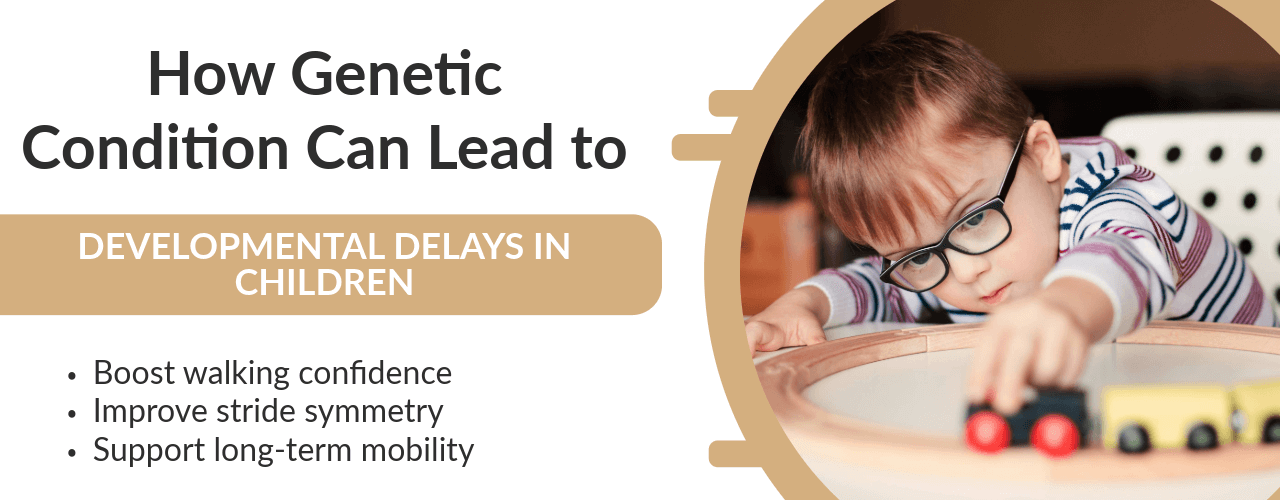
When it comes to childhood development, parents often expect steady progress as their child learns to roll over, crawl, walk, and play. However, for some families, this journey looks different. Genetic conditions and developmental delays often go hand in hand, influencing how a child grows, learns, and moves. Understanding this connection is an important first step toward seeking the right support and helping your child reach their fullest potential.
Feeling overwhelmed? Don’t worry. The team at Therapy In Motion is here to help.
Why Genetic Conditions Can Influence Development
Genetic conditions affect the way a child’s body and brain develop, often starting before birth. These conditions may alter muscle tone, joint mobility, balance, and motor coordination, making it harder for children to meet typical developmental milestones.
Some genetic conditions directly affect physical growth, while others impact muscle strength or the nervous system, resulting in delays in gross motor skills such as sitting, crawling, and walking.
However, our pediatric physical therapists can help your child build strength, coordination, and confidence in their movement.
Some of the Conditions That Can Cause Developmental Delays
Down Syndrome
- This condition is often characterized by low muscle tone and joint laxity, making it more difficult for children to gain stability and achieve age-appropriate motor milestones.
Fragile X Syndrome
- This syndrome can impact muscle strength, coordination, and sensory processing, affecting how children interact with their environment.
Rett Syndrome
- This condition primarily affects girls and leads to loss of motor skills after a period of normal development, creating significant challenges for movement and daily functioning.
Prader-Willi Syndrome
- This condition is associated with low muscle tone and delayed motor development, making early interventions critical.
How Pediatric Physical Therapy Supports Children with Genetic Conditions
When delays are related to genetic conditions, our team can provide structured, evidence-based strategies to help children progress. The goals go beyond movement alone, focusing on independence, confidence, and overall quality of life. Here’s what we can do:
- Improve muscle tone and strength through guided exercises designed to target weak or underused muscle groups.
- Enhance balance and coordination so children can navigate their environments more safely and independently.
- Develop gross motor skills by breaking down complex movements into manageable steps for skills like crawling, walking, and climbing.
- Support sensory processing by creating activities that help children integrate sensory information for smoother, more coordinated movements.
Children often gain mobility, improved posture, and greater participation in daily routines and play with consistent therapy. This creates a foundation for further development, giving them the tools they need to succeed in other therapies, school, and social interactions.
Why Early and Personalized Care Matters
The earlier therapy begins, the better the outcomes. Our pediatric PTs understand how to adapt treatment plans to your child’s unique needs. When designing our custom treatment plans, we consider the diagnosis, current abilities, and developmental goals of every kid we work with. These plans may involve:
- Home exercise programs to continue progress outside of therapy sessions.
- Collaboration with other healthcare providers for a comprehensive approach.
- Education for families to support their child’s progress and confidence at home.
This combination of professional guidance and family involvement ensures that children with genetic conditions and developmental delays receive the most effective support possible.
Encouragement for Families
If your child is living with a genetic condition that affects their development, you are not alone. Progress may take time, but meaningful improvements are possible with the right strategies and consistent support.
At Therapy In Motion, our team is committed to helping children with genetic conditions and developmental delays reach their fullest potential. We provide personalized, compassionate care tailored to your child’s needs, empowering them to grow stronger, more confident, and more independent.
Ready to explore how pediatric physical therapy can help? Contact our Olathe, KS clinic today to begin your child’s journey toward progress.



Leave a Reply