
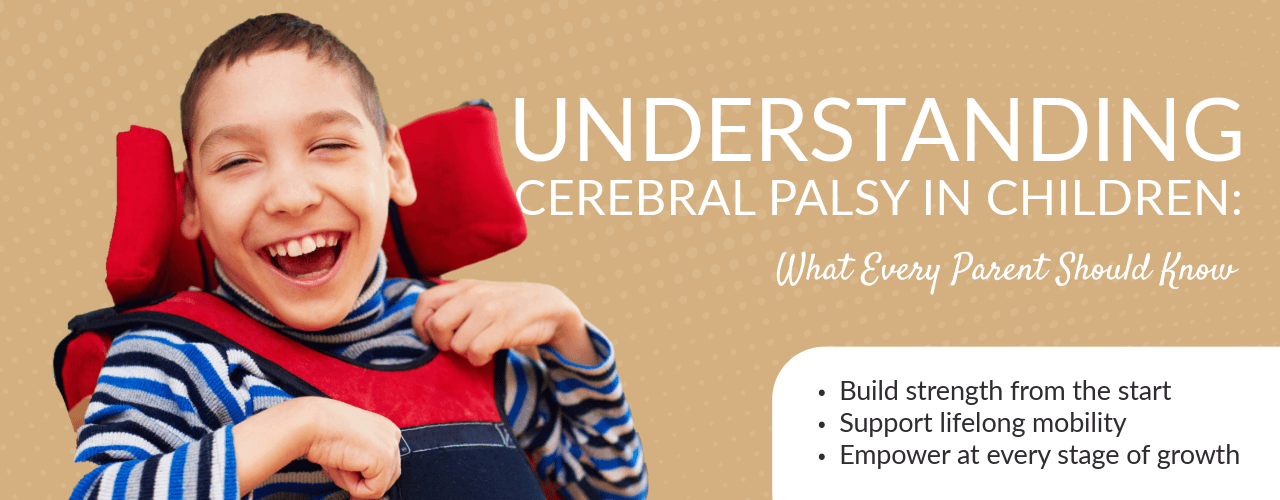
Raising a child certainly comes with its share of questions and uncertainties. And when your child is diagnosed with cerebral palsy, the questions multiply. You might wonder what this means for their future and what kind of care they’ll need. As pediatric physical therapists, we hear these concerns every day. With our understanding of cerebral palsy in children, we want to help alleviate some of your worries with this comprehensive guide.
Whether your child has just been diagnosed or you’re seeking better support, understanding cerebral palsy in children is the first step in making informed decisions. Let’s walk through what you need to know.
What Is Cerebral Palsy, Really?
Cerebral palsy (CP) is a group of movement disorders. It’s caused by abnormal brain development or injury to the developing brain, most often before birth. It primarily affects:
- Muscle tone (stiff or floppy muscles)
- Movement, coordination, and walking patterns
- Posture and balance
Many children with cerebral palsy also experience additional issues, such as learning difficulties, epilepsy, or speech and language challenges.
The symptoms can range from mild to severe. Not all kids with cerebral palsy will necessarily need lifelong care. Furthermore, CP is not progressive, so it does not worsen over time. However, symptoms can change as your child grows, which is one reason pediatric physical therapy plays a vital role in care.
Seven Things to Know About Cerebral Palsy in Children
1. Early Intervention Makes a Big Difference
Our pediatric physical therapists work with babies and toddlers to support muscle development and motor skills–and the earlier therapy starts, the better the outcomes! Early treatment takes advantage of your child’s growing brain and body, laying the groundwork for long-term mobility.
2. Every Child with CP Is Unique
No two children with cerebral palsy are exactly alike. Some may have trouble walking, while others need help with sitting or reaching. It all depends.
At Therapy In Motion, our therapists will always start by assessing your child’s abilities and creating a targeted plan that meets their needs, goals, and age.
3. Physical Therapy Supports More Than Movement
Many people assume physical therapy is just about helping kids with walking skills. In reality, it helps children improve balance, reduce tightness, and gain confidence. It can also support independence in daily activities like dressing and playing.
Essentially, by addressing the physical challenges of cerebral palsy in children, PT can help kids do more on their own.
4. It’s a Team Effort
Parents are essential to physical therapy success! While the work we do in the clinic is important, it’s equally vital that you continue PT at home.
We’ll give you the tools and guidance you need to support your child outside of their sessions. Small changes in daily routines can really help reinforce what kids work on during their time with their physical therapist.
Just think of us as a partner in your child’s growth!
5. Progress May Be Slow, but It Is Real
We design goals that make small, meaningful steps so physical therapy isn’t overwhelming for your child. While some gains may take time, every improvement matters in the long run.
Celebrating these wins helps motivate your child and you.
Remember, physical therapy is about persistence, patience, and progress, not perfection.
6. Pediatric Physical Therapy Evolves with Your Child
As your child grows, their needs will change. Our therapists will adjust their treatment plan to meet those needs at every stage. From infancy through adolescence, we help manage new challenges as they arise.
7. Hope Is Always Part of the Plan
Living with cerebral palsy is not without obstacles. However, with the right therapy and support, kids can thrive. At Therapy In Motion, we focus on what your child can do and build from there.
Let’s Take the First Step Together
You don’t have to navigate this journey alone! Pediatric physical therapy at Therapy In Motion can be an essential part of your child’s care plan.
If you have any questions about the process, we’re here to help. To get started, schedule an appointment at our Olathe, KS clinic today.
Let’s build a plan that empowers your child, one step at a time.




Leave a Reply