
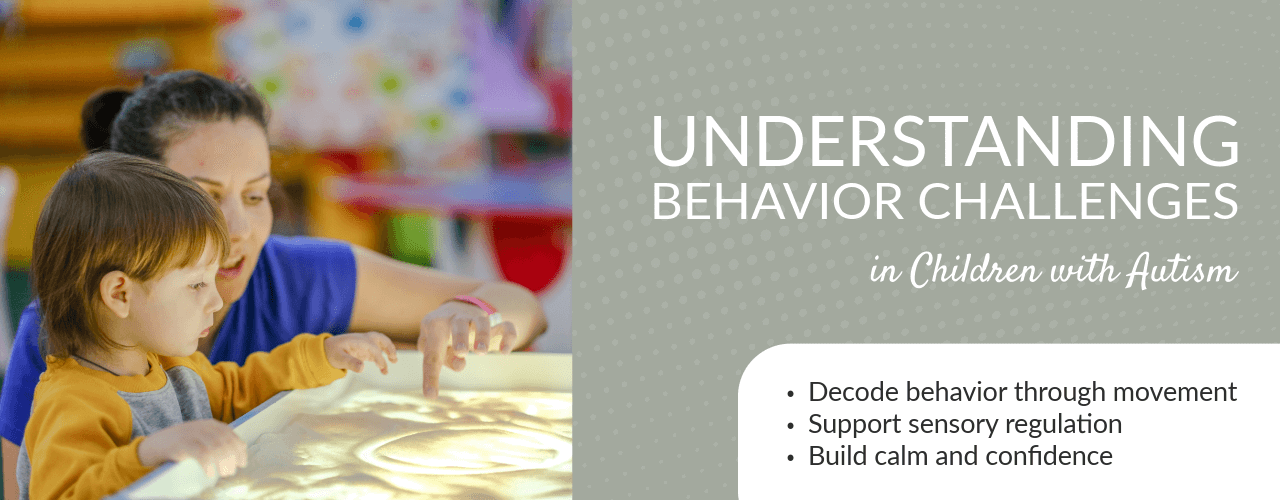
Navigating autism and behavior challenges can be overwhelming for families, especially when myths and misinformation cloud the facts. If your child is on the autism spectrum and experiences frequent meltdowns, difficulty following directions, or sensory-related behaviors, know that they aren’t doing it to be “bad”. There’s a reason.
At Therapy In Motion, we often see how motor development and sensory regulation directly impact a child’s behavior. This means that behavioral issues often have a root cause—one that we can help address.
To help you better understand these connections, we’re busting some of the most common myths about autism and behavior challenges. That way, you can get your child the support they need.
What Are We Getting Wrong About Autism and Behavior Challenges?
Myth #1: “My child is just being defiant.”
“Bad” behavior is often communication, not defiance. Children with autism may appear defiant when, in reality, they are struggling to express discomfort, confusion, or sensory overload.
For example, a child who resists climbing stairs during therapy may not be refusing to cooperate but instead reacting to fear, low muscle tone, or difficulty with balance. Understanding these behaviors as signals rather than disobedience allows our physical therapists to adjust their approach to your child’s needs.
Myth #2: “Behavior challenges mean therapy isn’t working.”
Change is hard, especially for children with autism. New movements or tasks in physical therapy can be physically and emotionally demanding. Behavioral outbursts might actually signal that a child is being stretched in healthy ways.
Our team understands this. As pediatric physical therapists trained in sensory integration and child development, we recognize that behavior challenges may be part of the process. We encourage children through these moments, not discourage them.
Myth #3: “All behavior problems are caused by autism.”
Behavior is influenced by many factors, not just diagnosis. While autism and behavior challenges are often connected, not every behavior stems from autism. Fatigue, illness, or environmental changes can affect any child’s mood and behavior. Children with autism may just express these challenges differently.
At Therapy In Motion, we consider the full context, including motor delays, coordination difficulties, and daily stressors. We never assume. We investigate with care.
Myth #4: “Physical therapy won’t help behavior issues.”
Because many behavior challenges are linked to sensory processing difficulties and motor delays, physical therapy is often an essential part of the process! It supports regulation and motor skills and helps children gain better control over their bodies, often reducing frustration, anxiety, and meltdowns.
At Therapy In Motion, we use movement-based strategies to improve strength, balance, and body awareness. These gains often lead to calmer, more organized behavior.
Myth #5: “If a child isn’t improving quickly, something is wrong.”
Progress with behavior challenges is rarely linear. Children grow and change at their own pace. Some may make rapid gains, while others need more time. Setbacks are common and do not mean failure.
That’s why we always set realistic, individualized goals. Celebrating small wins keeps children motivated and families encouraged. We focus on long-term support rather than quick fixes.
Helping Address Behavioral Issues In a Compassionate, Fact-Based Way
At Therapy In Motion, we understand that autism and behavior challenges affect more than just therapy sessions. They touch every part of a child’s daily life. That’s why we:
- Provide movement-based therapies that support regulation and motor development
- Educate families on what behaviors may be communicating
- Collaborate with other care providers for well-rounded support
- Replace outdated myths with evidence-informed care
We believe in a compassionate, informed approach that helps every child reach their potential.
Have questions about how physical therapy can support your child? Contact our Olathe, KS clinic today to learn how we can help your child thrive, one movement at a time.



Leave a Reply